
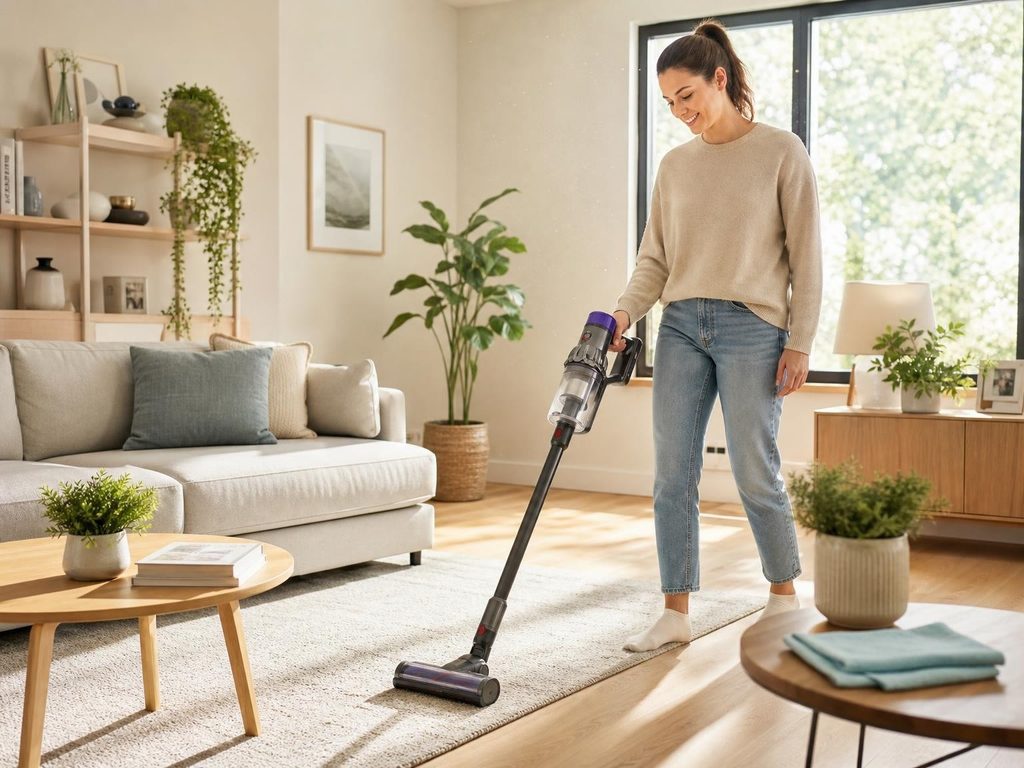
Household dust is rarely just one substance. It’s typically a jumble of fibers, soil particles, pollen, pet dander, shed skin cells, and whatever else happens to settle on surfaces throughout a home. Routine cleaning can meaningfully cut down on how much of this builds up, but no cleaning method—whether a traditional broom, a mop, or a cordless vacuum—will eliminate every airborne or settled particle completely. A more realistic goal is a whole-home approach that combines cleaning habits, humidity management, ventilation, and attention to the sources that introduce dust in the first place. Many households notice dust gathering around baseboards, under furniture, and near entryways, and understanding why these spots collect debris is the first step toward building a routine that actually works.
What household dust contains and why it accumulates
Common sources of indoor dust
Outdoor soil and pollen often hitch a ride into homes on shoes, clothing, and pets. Indoors, fibers shed continuously from carpets, bedding, upholstered furniture, and clothing. Pet dander and other biological particles add to the mix, while cooking, smoke, and candles contribute their own share of fine particles. Doors, windows, and ventilation systems also act as entry points for outdoor dust.
Why some areas collect more dust
Textiles and certain surfaces hold a static charge that attracts and retains particles, while low-traffic areas can quietly accumulate dust for weeks without anyone noticing. Clutter only makes things worse, adding more surfaces to clean and making thorough dusting harder to pull off. Carpeting and upholstery, in particular, tend to trap particles that later get released back into the air when disturbed by walking or sitting.
The U.S. Environmental Protection Agency notes that indoor dust can include a combination of outdoor and indoor-generated particles, and that reducing sources and improving ventilation are central strategies for managing indoor air quality. This guidance offers useful context, though it doesn’t suggest that ordinary household dust poses the same risk to every individual.
Build a practical dust-reduction routine
A sensible cleaning order starts with elevated surfaces—shelves, ceiling fans, and light fixtures—before moving down to floors, so that dislodged particles actually get removed instead of resettling somewhere else. A slightly damp microfiber cloth tends to trap more dust than a dry one, which can simply push particles into the air rather than capturing them.
Certain areas deserve more frequent attention: baseboards, window coverings, vents, the space under furniture, entryways, and spots where pets like to rest. Bedrooms also warrant regular care, since bedding accumulates skin cells and dust-mite debris over time.
A realistic schedule might look something like this:
- Frequently: entryways, visible spills, and pet areas
- Weekly: carpets, rugs, upholstered furniture, and commonly used rooms
- Periodically: baseboards, blinds, ceiling fans, and less-used rooms
A home with pets and wall-to-wall carpet will generally need more frequent attention than a low-clutter home with hard flooring, but the specific schedule matters less than whether it can realistically be maintained over time.
Choose cleaning methods that limit dust redistribution
Vacuuming considerations
Regular vacuuming of carpets, rugs, and upholstery helps remove embedded particles, but moving the vacuum slowly allows it to actually collect more dust rather than just passing over it. Appropriate attachments help with crevices, stairs, and fabric surfaces. Maintenance matters just as much as the equipment itself: filters, brushes, and seals should be checked according to the manufacturer’s instructions, since a poorly maintained vacuum can end up disturbing more particles than it collects. Allergy-sensitive individuals may benefit from stepping out of the room during vacuuming and returning once the airborne dust has settled.
Damp cleaning for hard floors and surfaces
Damp—not soaking wet—cleaning is generally more effective than dry sweeping on hard floors, since it captures particles rather than scattering them around. The amount of moisture should suit the flooring material, as too much water can damage wood or laminate. Surfaces and washable textiles should be allowed to dry fully afterward.
Key takeaway: Reducing dust works best when cleaning removes particles without redistributing them.
It’s worth noting that filtration performance depends on the entire system—seals, maintenance, and airflow—not simply a filter label. No cleaning method or filter type removes all allergens.
Manage humidity, textiles, and allergen sources
Controlling indoor humidity helps limit dust-mite activity and mold risk. Allergy specialists commonly suggest maintaining indoor relative humidity around 30% to 50%, adjusted for climate and building conditions. Ventilation, air conditioning, or dehumidifiers can help, particularly in bathrooms, kitchens, and basements where moisture tends to build up.
Washing bedding regularly, and considering allergen-resistant encasements where medically appropriate, can reduce dust-mite exposure in sleeping areas. These measures support general household comfort but aren’t a substitute for professional medical advice.
Pets and entryways are additional considerations. Grooming pets according to veterinary guidance, using washable mats near doors, and removing shoes indoors can all reduce how much outdoor debris makes its way into the home.
Avoid common cleaning mistakes
Frequent missteps include dusting with a completely dry cloth, vacuuming with a full bin or damaged seal, and neglecting corners or the areas beneath furniture. Heavily contaminated materials, such as visible mold, may require protective equipment and proper remediation rather than routine cleaning. Relying on fragranced products or air fresheners can mask odors without addressing the underlying pollutants.
Quick troubleshooting:
– Dust returns quickly: check entryways, textiles, pets, and ventilation.
– Musty odor or visible growth: investigate moisture sources.
– Symptoms worsen during cleaning: improve ventilation and use damp methods.
– A room stays dusty: inspect hidden surfaces and furniture undersides.
When cleaning is not enough
Persistent dampness, visible mold, water damage, or unusual odors may call for specialized assessment beyond ordinary housekeeping. Ongoing allergy or asthma symptoms should be discussed with a qualified healthcare professional, since cleaning reduces exposure but doesn’t diagnose or treat respiratory conditions. Duct cleaning, in particular, isn’t automatically necessary in every home and should be based on specific evidence rather than routine assumption.
A simple whole-home checklist
- Identify major sources of dust and moisture.
- Declutter surfaces that are hard to clean.
- Dust elevated surfaces with a damp cloth.
- Vacuum floors and upholstery with well-maintained equipment.
- Damp-clean compatible hard floors.
- Wash bedding and pet textiles regularly.
- Monitor humidity and improve ventilation.
- Reassess the routine based on recurring problem areas.
- Seek professional or medical guidance when needed.
Make dust control consistent, not complicated
Effective dust reduction comes from combining source control, regular cleaning, reasonable filtration, and moisture management—not from any single device or product. Start with the rooms that matter most for daily comfort, keep an eye on where dust keeps coming back, and adjust the routine from there. Addressing moisture or contamination at its source, alongside a consistent cleaning schedule, offers a far more durable path to better indoor air quality than any one-time fix.